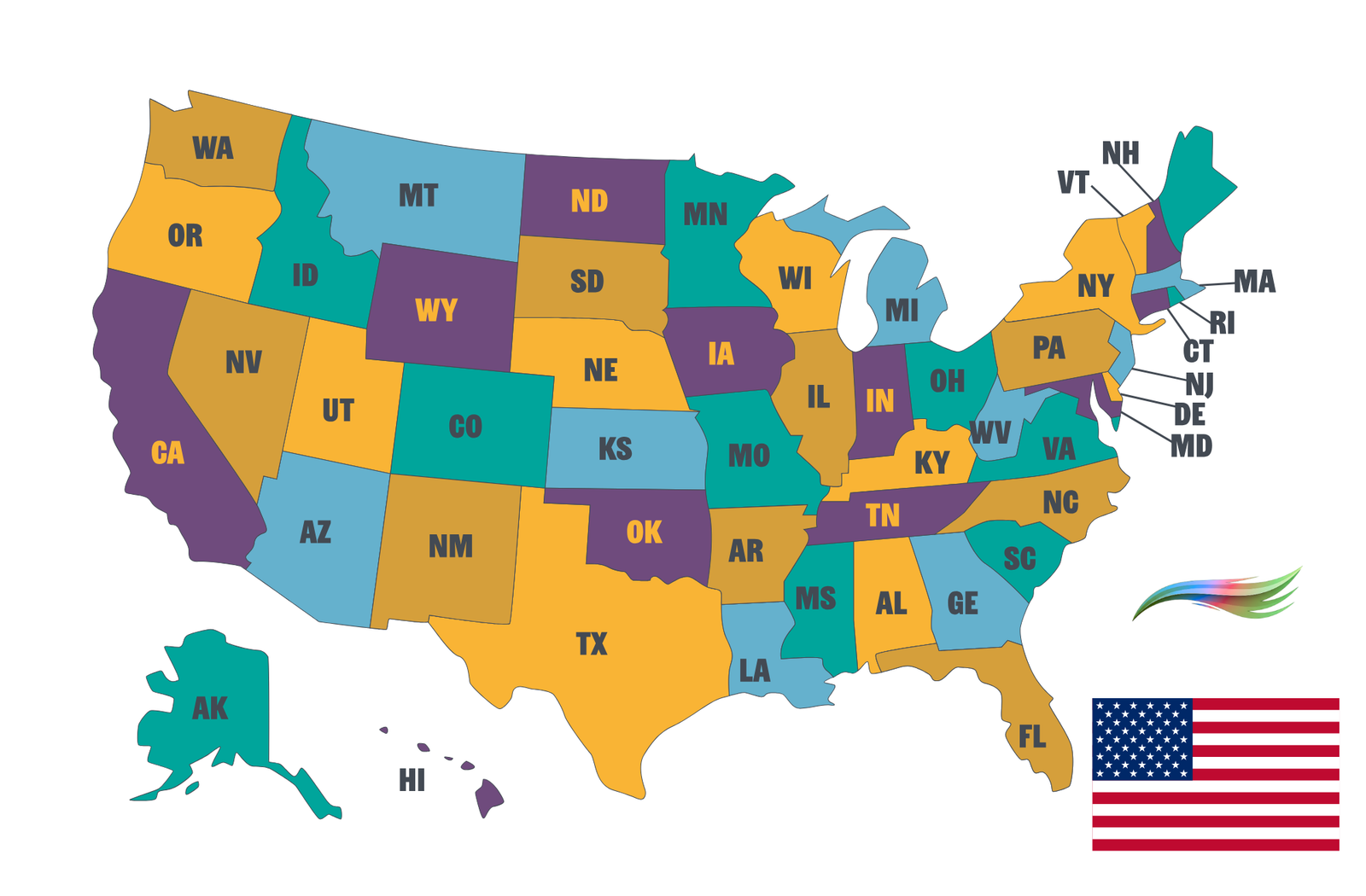
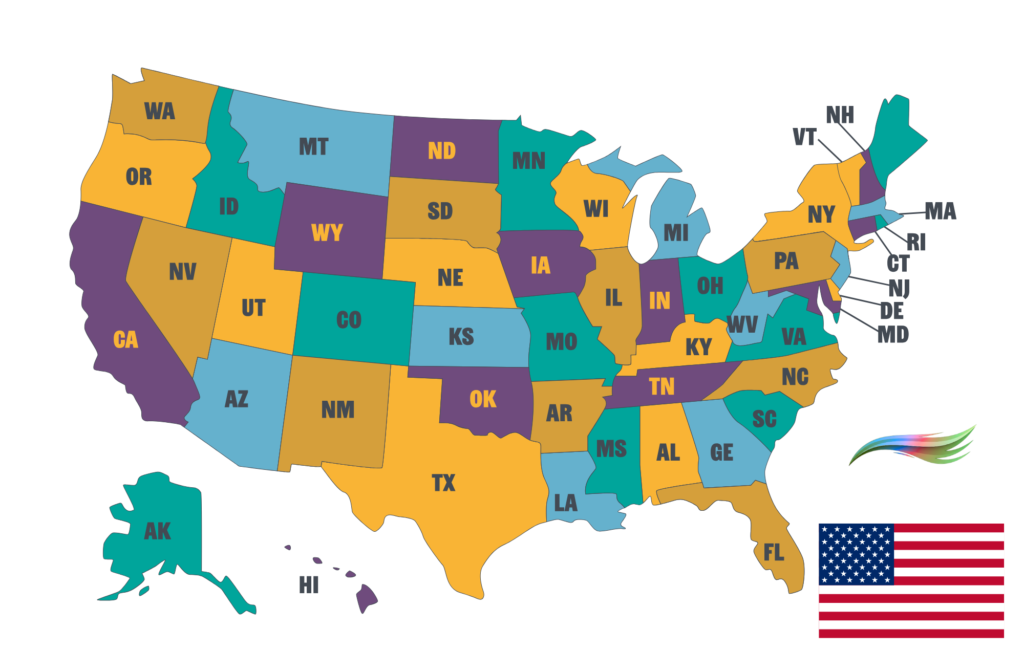
Have you ever wondered just how vast and diverse the United States really is? At first glance, the answer to “how many states are in the USA” seems simple—50. But behind that number lies a fascinating story of expansion, identity, culture, and geography that makes the United States one of the most diverse nations in the world.
From icy Arctic tundras to tropical beaches, from bustling financial hubs to quiet rural plains, each of the 50 states contributes something unique to the American identity. This blog takes you far beyond just counting states—we’ll explore how the country grew, what makes each state special, and why understanding this diversity matters.
The Simple Answer: How Many States Are in the USA?
The United States consists of 50 states. These states together form a federal republic, meaning power is shared between a national (federal) government and individual state governments.
Each state has:
- Its own constitution
- Its own government
- Its own laws (within federal limits)
- Its own cultural identity
The 50th and most recent state to join the Union was Hawaii in 1959.
The Origins: From 13 Colonies to 50 States
The story of the United States began with 13 British colonies along the East Coast. In 1776, these colonies declared independence, forming a new nation.
Over time, the country expanded through:
1. Land Purchases
- The Louisiana Purchase (1803) doubled the country’s size
- Alaska was purchased from Russia in 1867
2. Treaties
- Agreements with other nations added territories peacefully
3. Wars
- Land gained after conflicts, such as the Mexican-American War
4. Territorial Growth
- Regions developed into territories and later became states
This gradual expansion transformed a small coastal nation into a vast country spanning an entire continent.
The 50 States and Their Capitals
Below is a complete list of all U.S. states along with their capitals and approximate areas:
| State | Capital | Area (sq. mi) |
|---|---|---|
| Alabama | Montgomery | 50,244 |
| Alaska | Juneau | 665,384 |
| Arizona | Phoenix | 113,990 |
| Arkansas | Little Rock | 53,112 |
| California | Sacramento | 163,696 |
| Colorado | Denver | 104,094 |
| Connecticut | Hartford | 5,543 |
| Delaware | Dover | 2,489 |
| Florida | Tallahassee | 65,755 |
| Georgia | Atlanta | 59,276 |
| Hawaii | Honolulu | 10,932 |
| Idaho | Boise | 140,575 |
| Illinois | Springfield | 55,543 |
| Indiana | Indianapolis | 36,184 |
| Iowa | Des Moines | 56,276 |
| Kansas | Topeka | 82,276 |
| Kentucky | Frankfort | 40,408 |
| Louisiana | Baton Rouge | 44,689 |
| Maine | Augusta | 33,292 |
| Maryland | Annapolis | 12,406 |
| Massachusetts | Boston | 10,554 |
| Michigan | Lansing | 58,216 |
| Minnesota | Saint Paul | 84,492 |
| Mississippi | Jackson | 48,430 |
| Missouri | Jefferson City | 69,139 |
| Montana | Helena | 147,040 |
| Nebraska | Lincoln | 77,348 |
| Nevada | Carson City | 110,572 |
| New Hampshire | Concord | 9,349 |
| New Jersey | Trenton | 8,723 |
| New Mexico | Santa Fe | 121,590 |
| New York | Albany | 47,233 |
| North Carolina | Raleigh | 53,821 |
| North Dakota | Bismarck | 70,698 |
| Ohio | Columbus | 41,230 |
| Oklahoma | Oklahoma City | 69,899 |
| Oregon | Salem | 98,379 |
| Pennsylvania | Harrisburg | 49,520 |
| Rhode Island | Providence | 1,545 |
| South Carolina | Columbia | 32,087 |
| South Dakota | Pierre | 77,538 |
| Tennessee | Nashville | 42,244 |
| Texas | Austin | 268,596 |
| Utah | Salt Lake City | 84,489 |
| Vermont | Montpelier | 9,616 |
| Virginia | Richmond | 39,598 |
| Washington | Olympia | 68,138 |
| West Virginia | Charleston | 24,230 |
| Wisconsin | Madison | 56,154 |
| Wyoming | Cheyenne | 97,813 |
What Makes Each State Unique?
The United States isn’t just one country—it’s more like 50 mini-countries combined under one system. Each state differs in:
1. Geography
- Alaska: glaciers and tundra
- Arizona: deserts and canyons
- Florida: wetlands and beaches
2. Climate
- Tropical (Hawaii, Florida)
- Arctic (Alaska)
- Continental (Midwest states)
3. Culture
- Southern hospitality in Texas
- Fast-paced urban life in New York
- Tech innovation in California
4. Economy
- Silicon Valley (technology)
- Texas (oil and energy)
- Midwest (agriculture)
Fascinating Highlights of Select States
Alaska – The Last Frontier
Alaska is the largest state by area and offers breathtaking wilderness. It is home to North America’s tallest mountain and spectacular natural phenomena like the Northern Lights.
Arizona – Land of Natural Wonders
Famous for its dramatic landscapes, Arizona features deserts, red rock formations, and one of the most iconic natural landmarks in the world.
California – The Golden State
California is known for its diverse economy, entertainment industry, and natural beauty—from beaches to forests to deserts.
New York – More Than a City
While many think of New York City, the state also offers vast forests, mountains, and one of the largest protected park systems in the country.
Florida – The Sunshine State
Florida is famous for tourism, beaches, and theme parks, making it one of the most visited states in the U.S.
Texas – Bigger Than Life
Texas is known for its size, cultural pride, and economic strength. It combines history, industry, and modern urban growth.
Hawaii – Island Paradise
Hawaii stands apart geographically and culturally, offering volcanic landscapes, beaches, and a relaxed lifestyle.
Nevada – Entertainment and Nature
Home to Las Vegas, Nevada blends nightlife with stunning natural landscapes like mountains and lakes.
Colorado – Outdoor Adventure Hub
Colorado is famous for its mountains, skiing, hiking, and outdoor lifestyle.
Washington – Evergreen Beauty
Washington offers lush forests, mountains, and a strong technology-driven economy.
Why Do People Think There Are 52 States?
This is a very common misconception. Some people mistakenly believe there are 52 states due to confusion with:
- Puerto Rico (a U.S. territory)
- Washington, D.C. (the capital district)
However, neither is a state, so the official count remains 50.
States vs. Territories: What’s the Difference?
The U.S. also includes territories such as:
- Puerto Rico
- Guam
- U.S. Virgin Islands
These are governed by the United States but do not have full statehood rights.
The Diversity of the United States
One of the most remarkable aspects of the U.S. is its diversity:
Cultural Diversity
Each state has its own traditions, food, accents, and lifestyle.
Political Diversity
States can have different laws on issues like taxation, education, and healthcare.
Economic Diversity
Some states are industrial powerhouses, while others rely on agriculture or tourism.
Why Understanding the States Matters
Knowing about the 50 states helps in:
- Travel planning – Each state offers a different experience
- Business expansion – Laws and markets vary by state
- Education – Understanding geography and history
- Cultural awareness – Appreciating diversity
A Nation of 50 Identities
Rather than thinking of the U.S. as a single, uniform country, it’s more accurate to see it as a union of 50 unique identities.
Each state contributes:
- Its own history
- Its own culture
- Its own economic strengths
Together, they form a complex and dynamic nation.
Final Thoughts
So, how many states are in the USA? The answer is 50—but the real story goes far deeper.
Each state represents a distinct piece of a larger puzzle. From the frozen wilderness of Alaska to the tropical shores of Hawaii, the United States is a country defined by its diversity.
Understanding this diversity is key to appreciating what makes the nation unique. Whether you’re a traveler, student, or entrepreneur, exploring these 50 states opens up a world of knowledge and opportunity.
FAQs
How many states are in the USA?
There are 50 states in the United States.
What is the newest state?
Hawaii, admitted in 1959.
Has the U.S. ever had 52 states?
No, this is a myth.
Are territories states?
No, U.S. territories are not states.
How many countries are in the world?
There are over 190 recognized sovereign nations globally.
Conclusion
The United States is far more than just a number on a map. It is a collection of 50 diverse regions, each with its own story, character, and contribution.
If this guide sparked your curiosity, consider exploring more about individual states—you’ll discover that each one has something truly unique to offer.
What’s your favorite U.S. state, and why?