The global manufacturing sector is undergoing a significant transformation driven by rapid technological advancements, changing consumer demands, and the need for sustainable production. Businesses across the world are adapting to modern solutions to remain competitive, efficient, and resilient in an evolving market. Understanding the latest manufacturing industry trends is essential for companies, entrepreneurs, and industry professionals who want to stay ahead in this dynamic sector.
From automation and artificial intelligence to smart factories and sustainable production, several emerging trends are redefining how products are designed, produced, and delivered. This blog explores the most important manufacturing industry trends that are shaping the future of the industry.
1. Smart Manufacturing and Industry 4.0
One of the most significant manufacturing industry trends is the adoption of smart manufacturing technologies, often referred to as Industry 4.0. This approach integrates advanced technologies such as the Internet of Things (IoT), cloud computing, big data analytics, and artificial intelligence into manufacturing processes.
Smart factories use connected devices and sensors to collect real-time data from machines and production lines. This data helps manufacturers monitor performance, identify inefficiencies, and make data-driven decisions. As a result, companies can improve productivity, reduce downtime, and optimize resource utilization.
Industry 4.0 also allows machines to communicate with each other, enabling automated production systems that require minimal human intervention. This trend is revolutionizing manufacturing operations by making them faster, more accurate, and more flexible.
2. Automation and Robotics
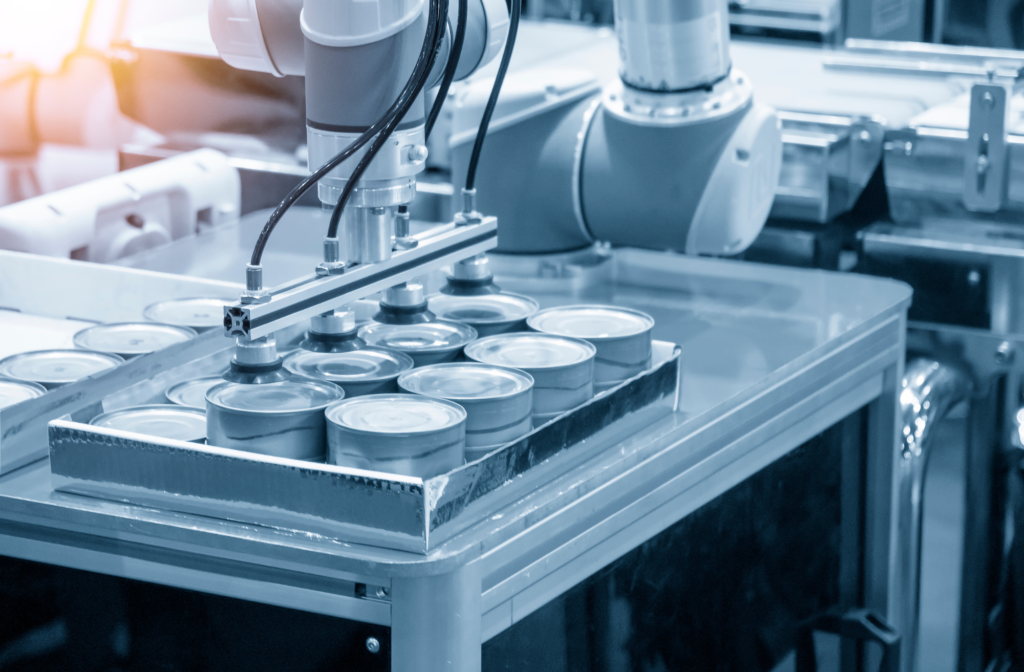
Automation continues to be one of the most influential manufacturing industry trends in recent years. Industrial robots and automated systems are increasingly being used in production lines to perform repetitive tasks such as assembly, packaging, and material handling.
Robots can operate continuously without fatigue, which significantly improves efficiency and production speed. Additionally, automation reduces human error and ensures consistent product quality.
Collaborative robots, commonly known as cobots, are also gaining popularity. Unlike traditional robots, cobots are designed to work safely alongside human workers. They assist employees in performing complex tasks, improving productivity while maintaining workplace safety.
Automation not only enhances operational efficiency but also helps manufacturers manage labor shortages and reduce operational costs.
3. Artificial Intelligence and Machine Learning
Artificial intelligence (AI) and machine learning are becoming key components of modern manufacturing systems. These technologies enable machines to analyze data, learn from patterns, and make intelligent decisions without constant human supervision.
One of the major applications of AI in manufacturing is predictive maintenance. By analyzing machine data, AI systems can predict equipment failures before they occur. This allows manufacturers to perform maintenance proactively, preventing costly downtime and production disruptions.
AI is also used in quality control processes. Advanced computer vision systems can inspect products on the production line and detect defects with greater accuracy than traditional inspection methods.
As AI technology continues to evolve, its role in shaping manufacturing industry trends will only become more significant.
4. Sustainable and Green Manufacturing
Sustainability is now a major priority for industries worldwide. Companies are focusing on environmentally responsible production practices to reduce their carbon footprint and meet regulatory requirements.
Green manufacturing involves using energy-efficient machinery, minimizing waste, recycling materials, and reducing harmful emissions. Many manufacturers are also adopting renewable energy sources such as solar and wind power in their production facilities.
Consumers today are more environmentally conscious, and businesses are responding by producing eco-friendly products and implementing sustainable manufacturing processes. This shift toward sustainability is one of the fastest-growing manufacturing industry trends globally.
By investing in green technologies, companies can not only protect the environment but also improve brand reputation and attract environmentally aware customers.
5. Additive Manufacturing (3D Printing)
Additive manufacturing, commonly known as 3D printing, is rapidly transforming product development and manufacturing processes. This technology allows manufacturers to create complex components layer by layer using digital designs.
One of the biggest advantages of 3D printing is the ability to produce prototypes quickly and cost-effectively. Manufacturers can test and modify product designs without the need for expensive molds or tooling.
Additionally, additive manufacturing enables customization and small-batch production, which is particularly beneficial for industries such as healthcare, aerospace, and automotive.
As technology continues to advance, additive manufacturing is becoming one of the most promising manufacturing industry trends, enabling faster innovation and more flexible production capabilities.
6. Digital Twins
Digital twin technology is another emerging trend that is revolutionizing manufacturing operations. A digital twin is a virtual representation of a physical product, machine, or production system.
Using real-time data collected from sensors, manufacturers can simulate and analyze the performance of machines and processes in a digital environment. This helps companies identify potential problems, optimize production workflows, and improve product design.
Digital twins also allow manufacturers to test changes in a virtual model before implementing them in the real world, reducing risks and improving operational efficiency.
As manufacturers increasingly adopt digital technologies, digital twin systems are becoming a crucial part of modern manufacturing industry trends.
7. Supply Chain Resilience and Localization
Recent global disruptions have highlighted the importance of resilient and flexible supply chains. Many manufacturers are now rethinking their supply chain strategies to reduce dependency on distant suppliers.
One of the key manufacturing industry trends is the localization of supply chains. Companies are shifting production closer to their markets to reduce transportation costs, shorten delivery times, and improve supply chain reliability.
Digital technologies are also helping manufacturers track inventory, monitor shipments, and manage logistics more efficiently. Advanced supply chain management systems provide real-time visibility and improve coordination between suppliers, manufacturers, and distributors.
Building a resilient supply chain is now a top priority for manufacturing companies around the world.
8. Workforce Transformation and Skill Development
As manufacturing technologies evolve, the role of the workforce is also changing. Modern manufacturing facilities require skilled workers who can operate advanced machines, analyze data, and manage automated systems.
Companies are investing heavily in employee training and upskilling programs to prepare workers for the digital manufacturing era. Technical skills such as robotics programming, data analysis, and AI system management are becoming increasingly valuable in the industry.
Another important aspect of workforce transformation is improving workplace safety and ergonomics. Automation and robotics are helping reduce physical strain on workers by handling hazardous or repetitive tasks.
Human expertise combined with advanced technology is becoming a key factor driving modern manufacturing industry trends.
9. Data-Driven Manufacturing
Data has become one of the most valuable assets in the manufacturing industry. Companies are leveraging big data analytics to gain insights into production processes, equipment performance, and customer demand.
By analyzing large volumes of data, manufacturers can identify inefficiencies, optimize production schedules, and reduce operational costs. Data-driven decision-making also helps companies respond quickly to market changes and customer preferences.
Real-time monitoring systems allow managers to track production performance and make immediate adjustments when necessary. This level of visibility improves overall operational efficiency and productivity.
Data-driven manufacturing is therefore becoming a cornerstone of modern manufacturing industry trends.
Conclusion
The manufacturing industry is entering a new era defined by innovation, digital transformation, and sustainability. Technologies such as automation, artificial intelligence, digital twins, and additive manufacturing are fundamentally changing how products are developed and produced.
At the same time, manufacturers are focusing on building resilient supply chains, adopting environmentally friendly practices, and investing in workforce development. These evolving strategies are helping companies stay competitive in an increasingly complex global market.
Understanding and adapting to these manufacturing industry trends is essential for businesses that want to succeed in the future. Companies that embrace technological innovation and sustainable practices will be better positioned to achieve long-term growth and maintain their leadership in the manufacturing sector.